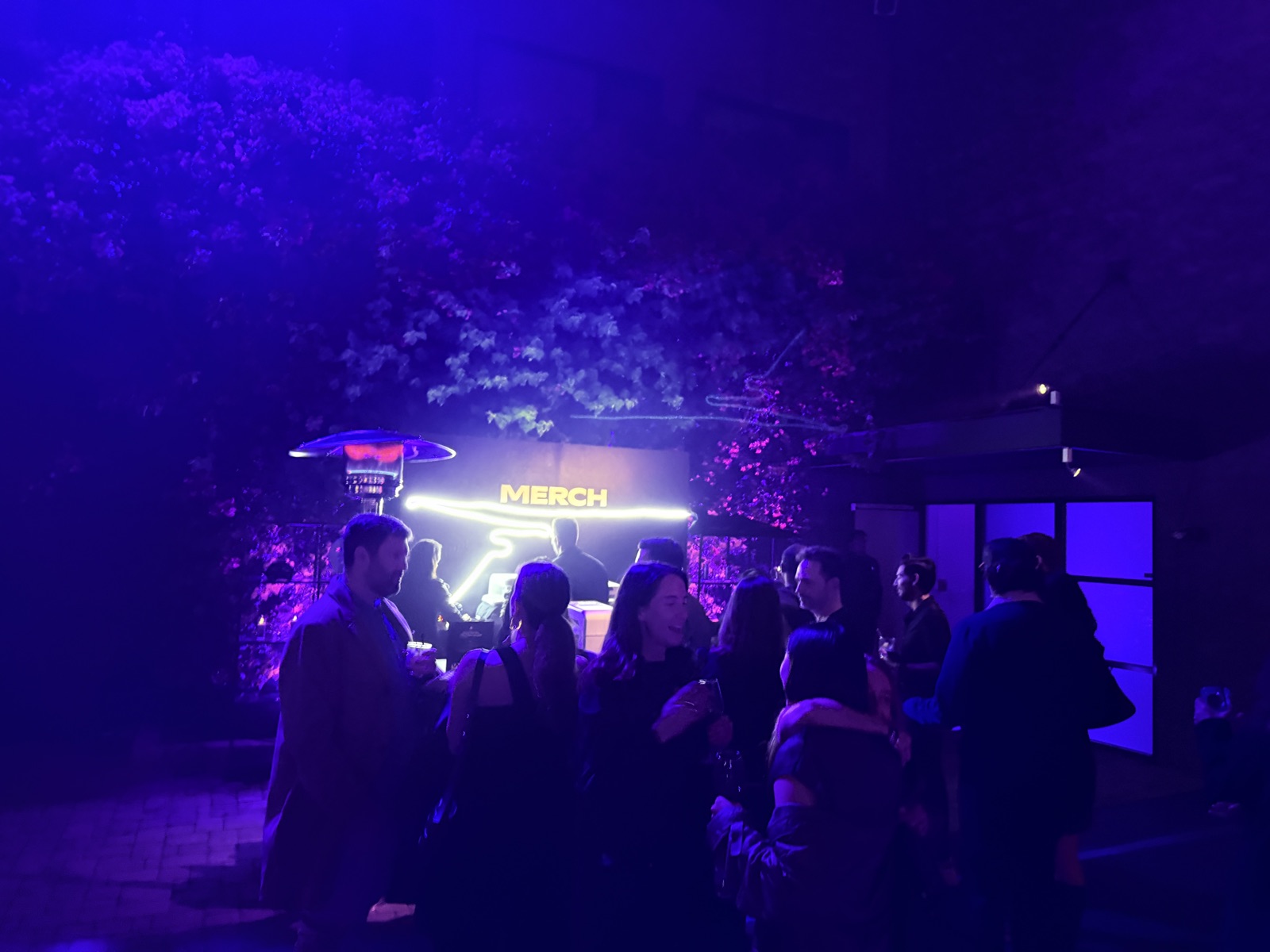
An event heat press station only feels effortless when the planning is done weeks before the doors open. Get the footprint, line flow, throughput math, and staffing right, and guests grab a custom shirt or jersey in a couple of minutes. Get it wrong, and a beautiful press table becomes a 40-person bottleneck by the second hour.
Merch Troop runs live event heat press stations across Orange County, Los Angeles, San Diego, Las Vegas, and nationwide for corporate activations, trade shows, conferences, and brand experiences. This guide walks through how we plan one from the ground up — the same checklist we use before we load a single press into the truck. The goal is simple: a station that produces a clean, finished piece every guest is proud to wear, without ever backing up the room.
Start with the footprint
Before anything else, we map the physical space. A working event heat press station is not just a press on a table — it is a small production line with distinct zones, and each zone needs room. Cram them together and operators bump elbows, transfers get mixed up, and hot platens end up too close to the crowd.
The four zones every station needs
- Intake and menu. Where guests choose a product and design. Keep this at the front edge so the line never spills into the press area.
- Press zone. One or more heat presses with an operator-only safety buffer. Guests stay on the opposite side of the table from the hot platen.
- Cool and finish. A rack or table where pressed items rest for 20 to 60 seconds before anyone handles them. Skipping this step is how transfers get smudged.
- Handoff. A clean pickup point, ideally offset from intake so arriving and departing guests never cross.
A single-press setup fits comfortably in a 10x10 booth. A two- or three-press station for a high-traffic activation usually wants 10x20 so the cool rack and handoff don't collide with the line.
Design the guest line, not just the table
The single biggest mistake in event merch is planning around the machine instead of the line. The press cycle is rarely the slow part — the slow part is a guest deciding between six colors and three designs while everyone behind them waits. We design the line to remove those decisions before a guest ever reaches the press.
- Publish a tight menu on signage so guests choose while they wait, not at the table.
- Pre-stage popular sizes and the most common designs so operators reach, not hunt.
- Use a one-way flow: pick on the left, press in the middle, collect on the right. No backtracking.
- Hand out a claim number or stub during peak rushes so guests can step away and return.
Do the throughput math
Throughput is where planning becomes numbers. A heat press cycle for a DTF transfer typically runs 15 to 30 seconds of press time, but the realistic per-guest pace — including positioning, the cool step, and handoff — lands around 30 to 60 seconds per piece on a well-run single press.
That means one press realistically finishes roughly 60 to 100 pieces per hour at a steady pace. A 250-guest, three-hour activation where you expect most guests to participate needs either two presses running in parallel or a deliberately staggered flow. We size the number of presses and operators to your guest count and event hours, then build in headroom for the inevitable opening and closing rushes.
A quick planning rule
- Estimate participating guests (often 60 to 80 percent of headcount).
- Divide by your event hours to get pieces-per-hour demand.
- Divide that by 70 to 90 pieces-per-hour per press to size the station.
Plan staffing, power, and the timeline
Every press needs a dedicated operator, and busy stations add a runner to handle intake, restock blanks, and manage the line so operators never stop pressing. Merch Troop staffs to the throughput target, not the bare minimum, because an understaffed station is the fastest way to a bad guest experience.
On the logistics side, confirm power early — heat presses draw real wattage, and two presses on one circuit will trip a breaker mid-event. We coordinate dedicated circuits or a generator with the venue. Then we lock the timeline: load-in and setup before doors, a dialed-in press calibration so the very first guest gets a clean result, live production through the event, and a clean teardown after.
Build for jerseys, totes, and sponsor merch too
A flexible station presses more than shirts. The same setup personalizes jerseys with names and numbers, presses sponsor logos onto canvas totes, and adds co-branded marks to hats and staff apparel. Planning for a mixed menu just means staging the right blanks and transfers in advance and keeping the menu tight enough that operators aren't switching setups every guest.