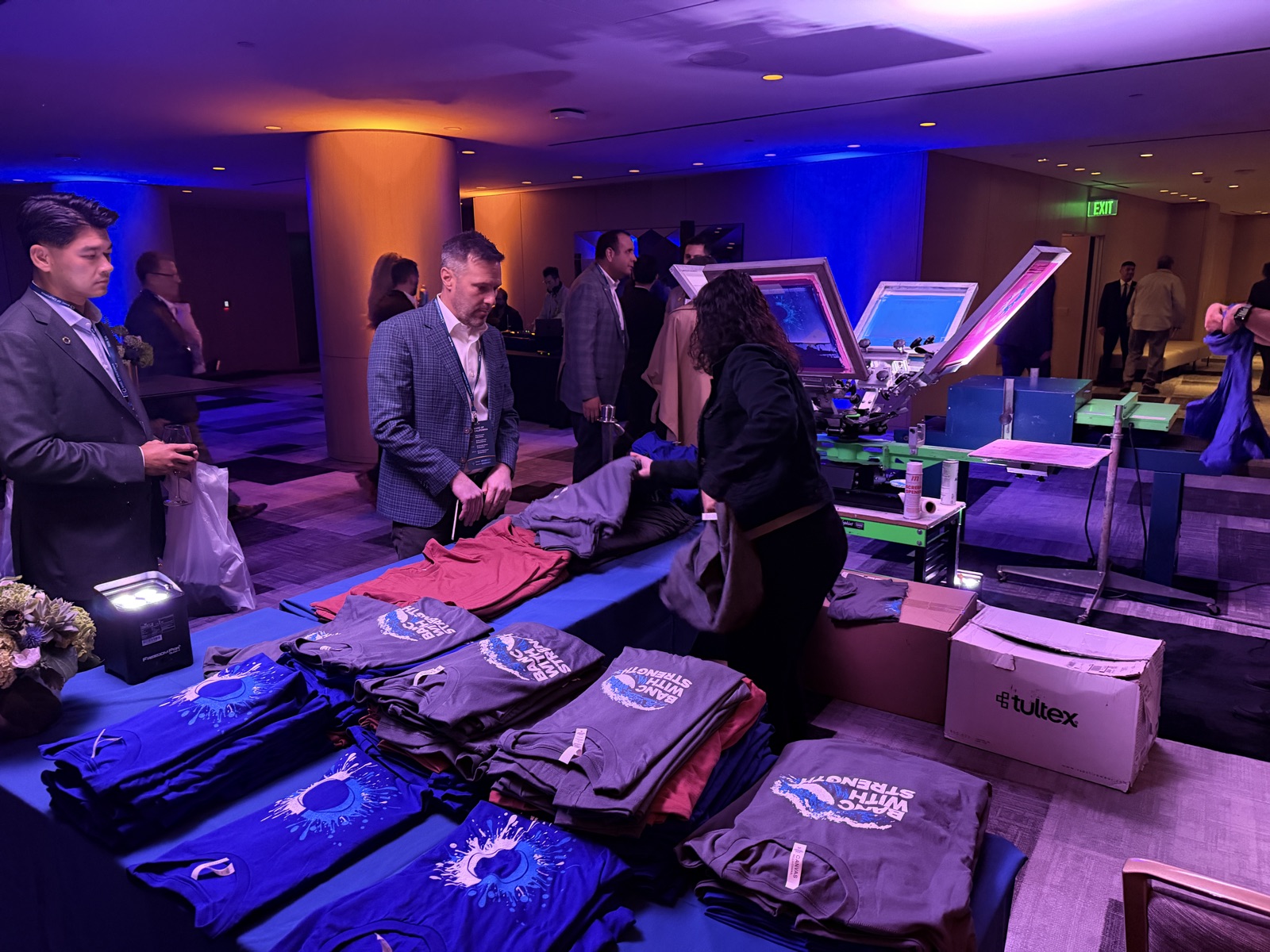
There is no single sticker price for an event heat press station, and any vendor who quotes one before asking about your event is guessing. The right number is built from seven inputs — event hours, staffing, product, artwork, throughput, travel, and rush. Understand each one and your quote stops feeling like a black box.
Merch Troop quotes live event heat press across Orange County, Los Angeles, San Diego, Las Vegas, and nationwide. This guide breaks down exactly what moves your number so you can plan a budget that fits your event — and so the quote you get back makes sense line by line.
1. Event hours and the full day
The biggest driver is time on site, and it is more than just the hours your station is open. A four-hour activation is really a longer day once you add load-in, setup, press calibration, and teardown. We bill for the working window because a crew and equipment are committed for all of it. Longer events and multi-day programs cost more in absolute terms but often cost less per guest, since setup and travel are spread across more production time.
2. Staffing and crew size
Every press needs a trained operator, and busy stations add a runner to manage intake, restock, and the line. Staffing scales with your throughput target: a high-traffic activation that needs three presses running in parallel needs the operators to match. This is usually the second-largest line on a quote, and it is the one you should never cut — an understaffed station produces a slow line and a bad guest experience, which defeats the whole point of live merch.
3. Product and blanks
What you press, and how much of it, moves the number directly.
- Product tier. A premium retail tee or a pressed hoodie costs more per piece than a value tee.
- Quantity. Total pieces — driven by guest count and participation rate — sets the blank budget.
- Sourcing. Whether Merch Troop sources the blanks or you supply them changes the product line.
- Mix. Hats, totes, and jerseys carry different unit costs than shirts.
4. Artwork and production prep
Clean output starts before the event. Artwork prep — sizing files, color work, building the transfers, and producing any sponsor patches or number kits — is real production time that happens in advance. A single simple logo is light prep; a multi-design menu with sponsor blocks, personalization, and several product placements is more. Good prep is why the first guest gets a result as clean as the last.
5. Throughput and equipment
How fast the station needs to move decides how much equipment it carries. A station expected to serve most of a 250-guest crowd in three hours needs multiple presses and the operators to run them. More presses means more equipment, more power, and more crew — all of which raise the quote but are the only way to keep a high-traffic line from backing up. We size equipment to your demand so you pay for the throughput you actually need.
The throughput trade-off
- Fewer presses cost less but cap your pieces-per-hour.
- More presses raise the quote but keep the line moving at peak.
- We model your guest count against event hours to find the right balance.
6. Travel and location
Where the event happens affects logistics cost. Events in our core Southern California footprint — Orange County, Los Angeles, San Diego — carry the lightest travel. Las Vegas and farther nationwide programs add travel, transport, and sometimes lodging for the crew. With enough lead time these are easy to plan; they simply show up as a line on the quote rather than a surprise.
7. Rush and timeline
Lead time is its own cost factor. A comfortable two-to-four-week runway lets us source the best products, prep artwork carefully, and staff efficiently. A rush timeline can compress product availability and require expedited prep or overtime, which raises the number. Booking early is the single easiest way to keep your quote lean.
How the factors work together
None of these inputs live in isolation — they compound. A larger guest count raises product quantity, pushes up the throughput target, which adds presses and operators, which adds power and logistics. That is why a vendor cannot quote intelligently from a single number like "we expect 300 people." The useful questions are how many of those guests you expect to participate, over how many hours, with which products, in which city, on what timeline. Answer those and the quote builds itself line by line.
It also means there are smart levers to pull. If a budget is tight, the fastest savings usually come from tightening the product menu, right-sizing the throughput target instead of over-building presses, and giving us enough lead time to avoid rush fees. The lines you should protect are staffing and setup time — under-cutting those is what produces a slow, frustrating station, which undermines the entire reason to run live merch in the first place.
What a good quote looks like
A trustworthy event heat press quote is itemized, not a lump sum. You should be able to see the working hours including setup and teardown, the operators and runners, the equipment and number of presses, the product blanks, the artwork and production prep, and travel as its own line. When every factor is visible, you can adjust the event to fit the budget with confidence instead of negotiating against a number you cannot see inside. Merch Troop builds quotes this way on purpose, so planners across Orange County, Los Angeles, San Diego, Las Vegas, and nationwide know exactly what they are paying for.